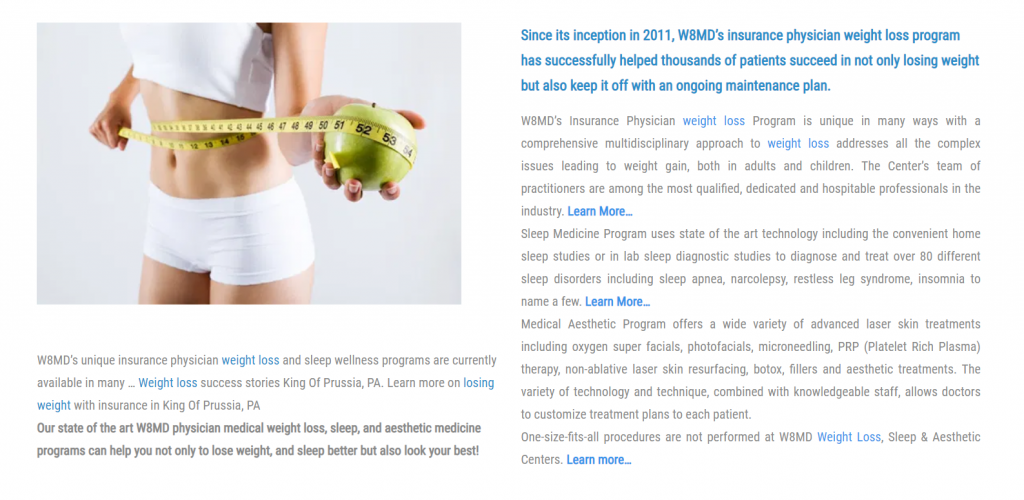
Health benefits of weight loss
Health benefits of weight loss, including diabetes prevention, heart health, sleep apnea, fatty liver, PCOS, and W8MD medical weight loss
| Health benefits of weight loss | |
|---|---|
| Synonyms | N/A |
| Pronounce | N/A |
| Specialty | N/A |
| Symptoms | Weight loss may improve obesity-related symptoms such as fatigue, breathlessness, joint pain, poor sleep, cravings, and reduced mobility |
| Complications | N/A |
| Onset | N/A |
| Duration | N/A |
| Types | N/A |
| Causes | Benefits occur through reduced body fat, lower visceral fat, improved insulin sensitivity, lower blood pressure, improved sleep, and reduced inflammation |
| Risks | N/A |
| Diagnosis | N/A |
| Differential diagnosis | N/A |
| Prevention | N/A |
| Treatment | Medical weight loss, low-carbohydrate diet, meal replacements, physical activity, behavior therapy, GLP-1 weight loss, sleep apnea treatment |
| Medication | N/A |
| Prognosis | N/A |
| Frequency | N/A |
| Deaths | N/A |
Health benefits of weight loss are the improvements in physical, metabolic, cardiovascular, respiratory, reproductive, musculoskeletal, mental, and quality-of-life outcomes that may occur when a person with overweight or obesity loses excess body weight. Weight loss can reduce visceral fat, improve insulin resistance, lower blood pressure, reduce triglycerides, improve blood glucose, decrease liver fat, reduce sleep apnea severity in some patients, improve mobility, and reduce the risk of several chronic diseases.
Obesity is a chronic medical disease associated with prediabetes, type 2 diabetes, hypertension, cardiovascular disease, dyslipidemia, fatty liver disease, sleep apnea, PCOS, osteoarthritis, gastroesophageal reflux disease, certain cancers, depression, reduced mobility, and reduced quality of life. Weight loss is one of the most effective ways to improve many obesity-related conditions.
The National Institute of Diabetes and Digestive and Kidney Diseases notes that losing weight may prevent or reduce weight-related problems such as high blood pressure, heart disease, and diabetes, and may improve quality of life.Choosing a Safe and Successful Weight-loss Program(link). National Institute of Diabetes and Digestive and Kidney Diseases. The Diabetes Prevention Program showed that intensive lifestyle change reduced the development of type 2 diabetes by 58% compared with placebo in high-risk adults.Diabetes Prevention Program(link). National Institute of Diabetes and Digestive and Kidney Diseases.
W8MD Weight Loss, Sleep and MedSpa Centers can help patients achieve the health benefits of weight loss through physician-supervised medical weight loss, low-carbohydrate diet counseling, ketogenic diet guidance when appropriate, meal replacements, very low calorie diet and low calorie diet options, traditional medications such as phentermine when appropriate, GLP-1 weight loss medications such as semaglutide or tirzepatide when appropriate, sleep apnea screening and treatment, and long-term weight maintenance support.
Overview
Weight loss benefits often begin before a person reaches an “ideal” weight. For many patients, losing 5% to 10% of starting body weight can improve metabolic risk factors. Greater weight loss may produce greater improvements, especially for type 2 diabetes, sleep apnea, fatty liver disease, PCOS, and joint symptoms.
A 5% to 10% weight loss may improve:
- Blood pressure
- Blood glucose
- Hemoglobin A1c
- Triglycerides
- HDL cholesterol
- Insulin resistance
- Fatty liver disease
- Sleep apnea
- Joint pain
- Mobility
- Quality of life
A review of cardiometabolic outcomes found that modest weight loss of 5% to less than 10% was associated with significant improvements in cardiovascular disease risk factors, while larger weight losses produced greater benefits."Benefits of Modest Weight Loss in Improving Cardiovascular Risk Factors in Overweight and Obese Individuals With Type 2 Diabetes".Diabetes Care.2011;PMC:3120182.
Why weight loss improves health
Weight loss improves health because excess body fat, especially visceral fat, is metabolically active. Visceral fat contributes to insulin resistance, inflammation, high triglycerides, fatty liver disease, high blood pressure, sleep apnea, and cardiovascular risk.
Weight loss may improve health by:
- Reducing visceral fat
- Improving insulin sensitivity
- Lowering insulin levels
- Reducing liver fat
- Lowering blood pressure
- Improving lipid levels
- Reducing inflammatory markers
- Reducing mechanical stress on joints
- Improving breathing during sleep
- Improving mobility and exercise tolerance
- Reducing reflux symptoms in some patients
- Improving self-confidence and quality of life
Diabetes prevention
One of the strongest health benefits of weight loss is the prevention of type 2 diabetes in high-risk patients. The Diabetes Prevention Program, a major clinical trial, used lifestyle change with a goal of at least 7% weight loss and at least 150 minutes per week of physical activity. It reduced diabetes incidence by 58% compared with placebo."Reduction in the Incidence of Type 2 Diabetes with Lifestyle Intervention or Metformin".New England Journal of Medicine.2002;PMC:1370926.
Weight loss may help prevent diabetes by:
- Improving insulin resistance
- Lowering fasting glucose
- Lowering post-meal glucose
- Reducing abdominal fat
- Reducing liver fat
- Improving muscle glucose uptake
- Reducing need for excess insulin secretion
Prediabetes
Prediabetes is a warning sign that blood sugar is higher than normal but not yet in the diabetes range. Weight loss is one of the most important treatments for prediabetes.
Weight loss may help patients with prediabetes by:
- Lowering hemoglobin A1c
- Lowering fasting glucose
- Improving insulin sensitivity
- Reducing progression to type 2 diabetes
- Improving blood pressure
- Improving triglycerides
- Reducing abdominal obesity
Type 2 diabetes
For people with type 2 diabetes, weight loss can improve blood glucose control and may reduce the need for medication in some patients. In selected patients, substantial weight loss may support diabetes remission, especially when diabetes is relatively early and pancreatic beta-cell function remains adequate.
Weight loss may improve:
- Hemoglobin A1c
- Fasting glucose
- Insulin resistance
- Medication requirements
- Blood pressure
- Triglycerides
- Fatty liver risk
- Cardiovascular risk factors
Diabetes medications should not be changed without medical supervision. Patients using insulin, sulfonylureas, or other glucose-lowering medications may need medication adjustment during weight loss to avoid hypoglycemia.
Cardiovascular benefits
Weight loss can improve several major cardiovascular risk factors. These include high blood pressure, abnormal cholesterol, high triglycerides, insulin resistance, inflammation, and sleep apnea.
Potential heart-health benefits include:
- Lower blood pressure
- Lower triglycerides
- Improved HDL cholesterol
- Lower LDL cholesterol in some patients
- Reduced inflammation
- Improved exercise tolerance
- Reduced sleep apnea severity in some patients
- Reduced cardiovascular risk in selected patients
The American Heart Association notes that being overweight or obese raises the risk for high blood pressure, a major risk factor for heart disease and stroke.Lose Weight and Lower Heart Disease Risk(link). American Heart Association.
Blood pressure
Weight loss can reduce hypertension in many patients. Blood pressure improvements may occur because of reduced insulin resistance, reduced sodium retention, improved vascular function, better sleep, and lower sympathetic nervous system activity.
Weight loss may help:
- Reduce systolic blood pressure
- Reduce diastolic blood pressure
- Improve response to blood pressure medications
- Reduce risk of stroke
- Reduce risk of heart failure
- Reduce kidney strain
Patients taking blood pressure medications may need monitoring during weight loss because blood pressure may fall as weight decreases.
Cholesterol and triglycerides
Weight loss can improve dyslipidemia, especially high triglycerides and low HDL cholesterol. Reduced refined carbohydrate intake may be particularly helpful for high triglycerides.
Weight loss may improve:
- Triglycerides
- HDL cholesterol
- Total cholesterol
- LDL cholesterol in some patients
- Non-HDL cholesterol
- Cardiometabolic risk
A study of cardiovascular risk factors found that patients losing 5% to 10% of body weight had significant reductions in triglycerides, total cholesterol, and LDL cholesterol."Effects on cardiovascular risk factors of weight losses limited to 5–10%".Translational Behavioral Medicine.2015;PMC:4987606.
Fatty liver disease
Fatty liver disease is strongly linked to obesity, abdominal fat, and insulin resistance. Weight loss is a major treatment strategy for fatty liver disease and MASH.
Weight loss may help by:
- Reducing liver fat
- Lowering liver enzymes
- Improving insulin resistance
- Lowering triglycerides
- Reducing inflammation
- Reducing fibrosis risk in selected patients
A low-carbohydrate or low-glycemic nutrition approach may be especially useful in patients with fatty liver and insulin resistance.
Sleep apnea
Obstructive sleep apnea is common in people with obesity and can worsen fatigue, insulin resistance, hunger, blood pressure, and cardiovascular risk. Weight loss can reduce sleep apnea severity in many patients, although it may not eliminate sleep apnea in everyone.
Benefits may include:
- Less snoring
- Fewer breathing pauses
- Improved daytime energy
- Better blood pressure control
- Improved insulin sensitivity
- Better quality of life
- Reduced need for higher PAP pressures in some patients
A review on obstructive sleep apnea and obesity notes that people with obesity should be screened for OSA and associated disorders."Obstructive Sleep Apnea and Obesity: Implications for Public Health".Sleep Medicine and Disorders.2017;PMC:5836788.
PCOS
Polycystic ovary syndrome or PCOS is strongly associated with insulin resistance. Weight loss may improve PCOS-related metabolic and reproductive features in some women.
Potential benefits include:
- Improved insulin resistance
- Improved menstrual regularity in some patients
- Reduced androgen-related symptoms in some patients
- Reduced prediabetes risk
- Reduced fatty liver risk
- Improved fertility in some patients
- Reduced cravings and abdominal weight gain
Metabolic syndrome
Metabolic syndrome is a cluster of abdominal obesity, high triglycerides, low HDL cholesterol, high blood pressure, and elevated blood glucose. Weight loss can improve many features of metabolic syndrome.
Weight loss may improve:
- Waist circumference
- Triglycerides
- HDL cholesterol
- Blood pressure
- Fasting glucose
- Insulin resistance
Joint pain and mobility
Excess weight increases mechanical stress on weight-bearing joints such as the knees, hips, ankles, and lower back. Weight loss may reduce pain and improve mobility.
Benefits may include:
- Less knee pain
- Less hip pain
- Less back pain
- Improved walking tolerance
- Improved stair climbing
- Better exercise capacity
- Reduced disability
- Improved daily function
Gastroesophageal reflux disease
Weight loss may improve gastroesophageal reflux disease symptoms in some patients by reducing abdominal pressure and improving dietary patterns.
Possible improvements include:
- Less heartburn
- Less regurgitation
- Reduced nighttime reflux
- Improved sleep quality
- Reduced need for reflux medication in selected patients
Cancer risk
Obesity is associated with increased risk of several cancers. Weight loss and long-term weight maintenance may help reduce obesity-related cancer risk, although the relationship varies by cancer type and individual risk factors.
Obesity-related cancers may include:
- Endometrial cancer
- Breast cancer after menopause
- Colorectal cancer
- Kidney cancer
- Liver cancer
- Gallbladder cancer
- Pancreatic cancer
- Esophageal adenocarcinoma
Mental health and quality of life
Weight loss may improve self-esteem, body image, mobility, energy, and quality of life. However, weight loss should not be framed as the only path to self-worth or mental health. Compassionate care is important because weight stigma can worsen depression, anxiety, and avoidance of medical care.
Potential mental-health and quality-of-life benefits include:
- Improved self-confidence
- Better body image in some patients
- Improved energy
- Less physical limitation
- Improved sleep
- Reduced social avoidance
- Improved mood in some patients
- Better participation in work and family activities
Patients with depression, anxiety, binge eating disorder, or body image distress may need mental health support as part of obesity treatment.
Benefits by amount of weight loss
Different degrees of weight loss may produce different health benefits.
| Approximate weight loss | Possible health benefits |
|---|---|
| 3% to 5% | Lower triglycerides, modest blood pressure improvement, early blood glucose improvement in some patients |
| 5% to 10% | Improved blood pressure, blood glucose, triglycerides, HDL cholesterol, insulin resistance, fatty liver risk, and mobility |
| 10% to 15% | Greater improvement in diabetes risk, sleep apnea, fatty liver disease, PCOS, joint pain, and quality of life |
| 15% or more | Greater likelihood of major metabolic improvement, diabetes remission in selected patients, and substantial improvement in obesity-related complications |
Benefits of physical activity even without large weight loss
Physical activity improves health even when the scale changes slowly. The American Heart Association states that regular physical activity improves blood pressure, insulin sensitivity, cholesterol levels, and cardiorespiratory fitness in adults with overweight or obesity, independent of weight loss.Move more for your health, not just for the scale(link). American Heart Association Newsroom.
Physical activity may improve:
- Insulin sensitivity
- Blood pressure
- Fitness
- Mood
- Sleep
- Muscle mass
- Bone health
- Weight maintenance
Importance of maintaining a healthy weight
Losing weight is only the first phase. Long-term health benefits depend on maintaining weight loss or preventing major weight regain. Weight regain is common because the body often responds to weight loss with increased hunger and reduced energy expenditure.
Weight maintenance requires:
- Long-term follow-up
- Protein-focused meals
- Reduced refined carbohydrates
- Regular physical activity
- Resistance training
- Weekly weight monitoring
- Sleep optimization
- Stress management
- Relapse prevention
- Medication continuation when appropriate
- Treatment of sleep apnea
Nutrition for long-term health
Healthy eating for weight loss maintenance should be sustainable and individualized. Many patients with insulin resistance benefit from a low-glycemic, low-carbohydrate, or Mediterranean-style pattern.
Helpful nutrition strategies include:
- Protein at each meal
- Non-starchy vegetables
- High-fiber foods
- Healthy fats
- Reduced added sugars
- Reduced refined grains
- Reduced sugary drinks
- Portion control
- Meal planning
- Meal replacements when useful
Physical activity for long-term health
Regular physical activity is important for weight maintenance and general health. A balanced plan may include aerobic activity, resistance training, flexibility, and daily movement.
Examples include:
- Walking
- Brisk walking
- Cycling
- Swimming
- Resistance training
- Strength training
- Yoga
- Stretching
- Post-meal walking
- Daily step goals
Medical weight loss
Medical weight loss can help patients who struggle to lose weight with lifestyle change alone or who have obesity-related conditions. Medical weight loss uses clinical evaluation, nutrition planning, medication when appropriate, and long-term follow-up.
Medical weight-loss tools may include:
- Nutrition counseling
- Low-carbohydrate diet
- Ketogenic diet
- Low calorie diet
- Very low calorie diet
- Meal replacements
- Behavior therapy
- Phentermine
- Semaglutide
- Wegovy
- Tirzepatide
- Zepbound
- Mounjaro
- Qsymia
- Contrave
- Orlistat
- Bariatric surgery referral when appropriate
How W8MD can help
W8MD Weight Loss, Sleep and MedSpa Centers can help patients achieve the health benefits of weight loss through an integrated, physician-supervised program.
W8MD may help with:
- Physician-supervised medical weight loss
- Weight-loss goal setting
- Body mass index assessment
- Waist circumference tracking
- Insulin resistance evaluation
- Prediabetes screening
- Type 2 diabetes risk reduction
- Metabolic syndrome treatment
- Fatty liver disease risk reduction
- PCOS support
- Sleep apnea screening
- Home sleep test
- CPAP support
- Low-carbohydrate diet planning
- Ketogenic diet guidance when appropriate
- Meal replacements
- Protein planning
- Very low calorie diet options when appropriate
- Low calorie diet options
- Traditional medications such as phentermine when appropriate
- GLP-1 weight loss evaluation
- Semaglutide and Wegovy options when appropriate
- Tirzepatide and Zepbound options when appropriate
- Long-term weight maintenance
W8MD and diabetes prevention
W8MD can help patients with obesity, insulin resistance, or prediabetes reduce diabetes risk through structured medical weight loss, low-glycemic nutrition, physical activity guidance, medication review, and follow-up. Patients with prediabetes may benefit from early intervention before diabetes develops.
W8MD and cardiovascular risk
W8MD can help reduce cardiovascular risk by addressing obesity, blood pressure, dyslipidemia, insulin resistance, sleep apnea, and physical inactivity. For selected patients, GLP-1 medications such as semaglutide may also provide cardiovascular benefit when medically appropriate.
W8MD and sleep apnea
Because W8MD integrates medical weight loss and sleep medicine, patients with obesity can be screened for sleep apnea. Treating sleep apnea may improve energy, blood pressure, cravings, insulin resistance, and weight-loss success.
W8MD and long-term maintenance
W8MD emphasizes maintenance because rapid weight loss without maintenance often leads to regain. Maintenance support may include ongoing visits, meal planning, medication continuation when appropriate, sleep care, protein goals, physical activity, and relapse prevention.
Frequently asked questions
How much weight loss improves health?
Even 5% to 10% weight loss can improve blood pressure, blood sugar, triglycerides, insulin resistance, and quality of life.
Can weight loss prevent diabetes?
Yes. In high-risk adults, the Diabetes Prevention Program lifestyle intervention reduced diabetes incidence by 58% compared with placebo.Diabetes Prevention Program(link). National Institute of Diabetes and Digestive and Kidney Diseases.
Can weight loss improve type 2 diabetes?
Yes. Weight loss can improve blood glucose control, reduce insulin resistance, and reduce medication needs in some patients. Medication changes should be supervised by a clinician.
Can weight loss improve sleep apnea?
Yes, weight loss can reduce sleep apnea severity in many patients, but sleep apnea may still require CPAP, BiPAP, APAP, oral appliance therapy, or other treatment.
Can weight loss improve fatty liver?
Yes. Weight loss can reduce liver fat and improve metabolic risk factors linked to fatty liver disease.
Does exercise help even if weight loss is slow?
Yes. Physical activity improves blood pressure, insulin sensitivity, cholesterol levels, and fitness even when the scale changes slowly.Move more for your health, not just for the scale(link). American Heart Association Newsroom.
Can W8MD help with weight loss medications?
Yes. W8MD can evaluate patients for traditional medications such as phentermine and GLP-1 medications such as semaglutide or tirzepatide when medically appropriate.
Why is weight maintenance important?
Weight maintenance is important because many obesity-related benefits can diminish if weight is regained. Long-term structure and follow-up improve the chance of lasting success.
When to call a doctor
Seek medical evaluation if you have:
- BMI of 30 or higher
- BMI of 27 or higher with medical problems
- Prediabetes
- Type 2 diabetes
- High blood pressure
- High triglycerides
- Fatty liver disease
- Sleep apnea symptoms
- PCOS
- Joint pain limiting activity
- Rapid weight gain
- Weight regain after repeated diets
- Depression or binge eating symptoms
Conclusion
Weight loss can produce major health benefits, especially for patients with obesity-related conditions such as prediabetes, type 2 diabetes, hypertension, dyslipidemia, fatty liver disease, sleep apnea, PCOS, joint pain, and metabolic syndrome. Even modest weight loss can improve health, while larger and sustained weight loss may provide greater benefits. W8MD Weight Loss, Sleep and MedSpa can help patients achieve and maintain these benefits through physician-supervised medical weight loss, nutrition planning, medication options, sleep apnea care, and long-term maintenance support.
See also
- Obesity
- Weight loss
- Medical weight loss
- Weight maintenance
- Body mass index
- Insulin resistance
- Prediabetes
- Type 2 diabetes
- Metabolic syndrome
- Fatty liver disease
- Sleep apnea
- PCOS
- Hypertension
- Dyslipidemia
- Low-carbohydrate diet
- Ketogenic diet
- Meal replacements
- GLP-1 weight loss
- Semaglutide
- Tirzepatide
- Phentermine
- W8MD Weight Loss, Sleep and MedSpa
Further reading
- Choosing a Safe and Successful Weight-loss Program(link). National Institute of Diabetes and Digestive and Kidney Diseases.
- Diabetes Prevention Program(link). National Institute of Diabetes and Digestive and Kidney Diseases.
- "Reduction in the Incidence of Type 2 Diabetes with Lifestyle Intervention or Metformin".New England Journal of Medicine.2002;PMC:1370926.
- "Benefits of Modest Weight Loss in Improving Cardiovascular Risk Factors in Overweight and Obese Individuals With Type 2 Diabetes".Diabetes Care.2011;PMC:3120182.
- "Effects on cardiovascular risk factors of weight losses limited to 5–10%".Translational Behavioral Medicine.2015;PMC:4987606.
- Lose Weight and Lower Heart Disease Risk(link). American Heart Association.
- Move more for your health, not just for the scale(link). American Heart Association Newsroom.
- "Obstructive Sleep Apnea and Obesity: Implications for Public Health".Sleep Medicine and Disorders.2017;PMC:5836788.
External links
- W8MD Weight Loss, Sleep and MedSpa
- NIDDK - Choosing a Safe and Successful Weight-loss Program
- NIDDK - Diabetes Prevention Program
- American Heart Association - Weight loss and heart disease risk
| GLP-1 receptor agonists, incretin therapy, and weight loss medications | ||||||||||
|---|---|---|---|---|---|---|---|---|---|---|
|